Event report Aéronautique - Aérospatiale
SEAAF 2026 takeaways
On October 1, 2026, industry leaders, entrepreneurs, policymakers, researchers, investors, manufacturers, and innovators gathered in Seattle for the fourth edition of the Seattle European-American Air Forum (SEAAF). Organized by the French-American Chamber of Commerce Pacific Northwest (FACC PNW), SEAAF has become a premier platform for strengthening transatlantic dialogue and collaboration across the aerospace and space sectors.
This year's edition marked an important milestone for the forum. For the first time, SEAAF was organized as part of Seattle Space Week, reflecting the Chamber's commitment to embracing the evolution of the regional ecosystem and the increasing convergence between aerospace and space industries. As Seattle's space economy continues to grow, the conference expanded its focus to address opportunities that span aviation, manufacturing, commercial space, artificial intelligence, advanced technologies, and entrepreneurship.
The program brought together stakeholders from across North America and Europe to explore how collaboration, innovation, and workforce development can help shape the future of flight and space exploration.
Building the future of Aerospace and Space
through Transatlantic collaboration
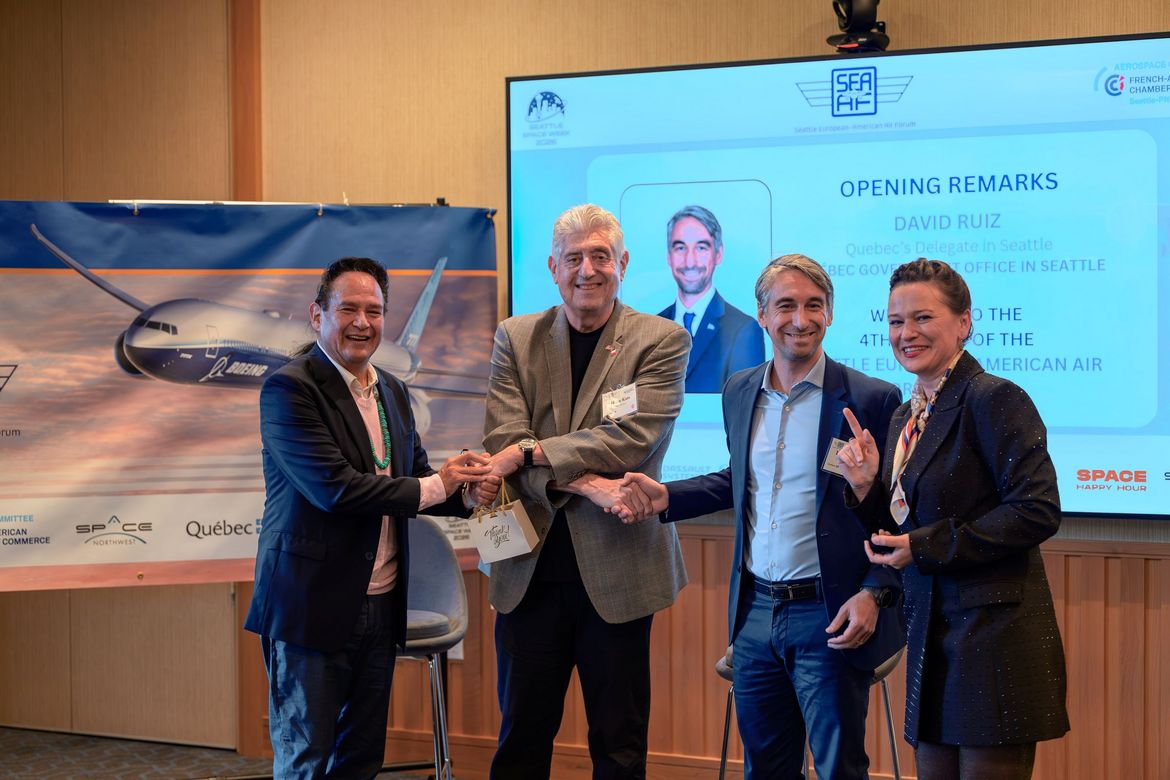
The conference opened emphasizing the importance of international partnerships in addressing today's aerospace challenges. The date itself carried special significance. October 1 marks several historic milestones in aviation and space history, including NASA's first day of operations in 1958 and Concorde's achievement of supersonic flight in 1969, and the birth of William (Bill) Boeing in 1881! SEAAF organizers highlighted these milestones as a reminder that innovation has always depended on bold vision and international cooperation.
The conversations started with a session titled “From Space Robotics to Launch Systems: How Québec Is Building a Complete Space Ecosystem.” The scale of Québec's aerospace sector remains remarkable: with 93% of Canada's aircraft production concentrated in the province and more than 230 aerospace companies and organizations clustered around Montréal, the region stands as the world's third-largest aerospace hub, illustrating why Québec continues to play such an influential role in shaping the future of aviation and space.
The discussion explored how aerospace and space activities are increasingly converging through investments in robotics, propulsion systems, advanced manufacturing, research institutions, and workforce development. A key takeaway was that innovation thrives when governments, universities, startups, investors, and large corporations work together within an integrated ecosystem.Responsive launch is increasingly viewed as a strategic asset, enabling faster deployment of space systems while strengthening commercial, defense, and national security capabilities. Greater collaboration between Canada and the United States presents a significant opportunity to enhance the resilience, competitiveness, and security of the North American space ecosystem as demand for launch services continues to expand.
Trade, supply chains, and manufacturing realities
International collaboration remains central to aerospace and defense.
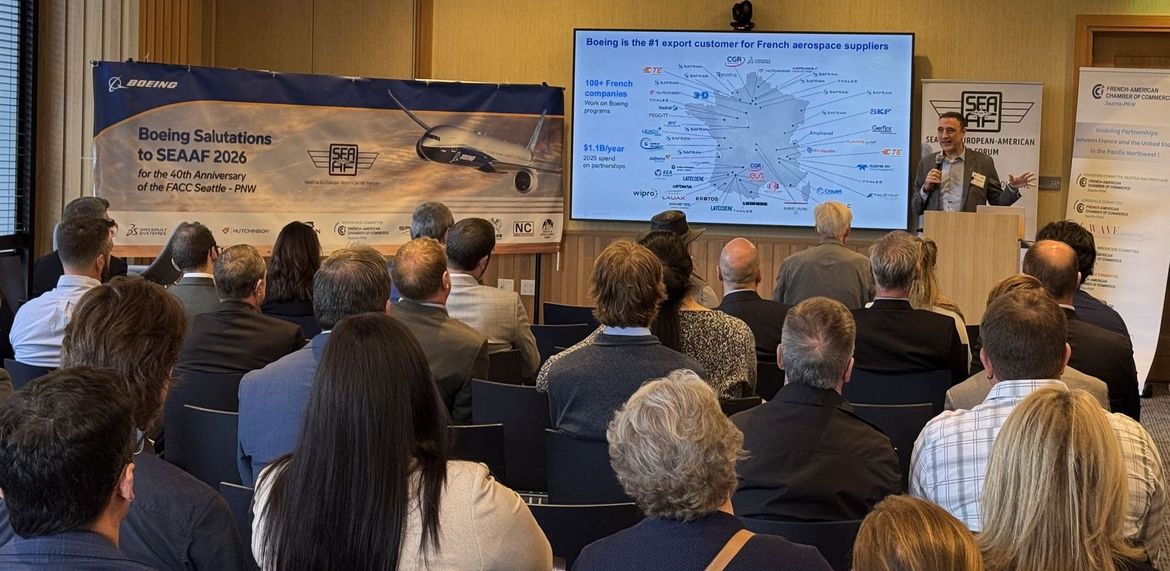
During "Turning trade control obstacles into strategic opportunities," participants examined how evolving export controls, security regulations, and geopolitical realities are reshaping global business relationships. A recurring theme emerged: organizations that proactively incorporate regulatory compliance into their strategic planning are often better equipped to grow internationally. Rather than viewing compliance solely as a challenge, participants discussed how it can strengthen trust, reduce risk, and create opportunities for deeper cooperation across borders.
One of the aerospace industry's most urgent topics was addressed during “Supply chain stability: opportunities & challenges.” As manufacturers continue working to increase production rates, discussions focused on the need to align supplier readiness, workforce availability, logistics capabilities, quality systems, and industrial capacity. Among the strongest takeaways was the recognition that aerospace production cannot outpace the readiness of its supply chain. Sustainable growth requires not only increased capacity but also resilience, transparency, and stronger collaboration throughout the manufacturing ecosystem. Participants emphasized that long-term competitiveness will depend on the industry's ability to anticipate disruptions and adapt quickly to changing market conditions.
The afternoon continued with a discussion on “Aerospace production challenges: delivering quality, rate and cost in an uncertain environment.” The conversation addressed one of the industry's most difficult balancing acts: increasing production while maintaining quality, safety, and cost effectiveness. Several themes emerged. Sustainable production growth requires the entire industrial ecosystem to scale together, including workforce skills, equipment, factory capacity, suppliers, and manufacturing processes. Simply adding labor is not enough. Automation delivers the greatest value when focused on major production bottlenecks. Manufacturers should prioritize solutions that significantly improve throughput and productivity while involving manufacturing expertise early in product design to avoid downstream inefficiencies. Quality must be embedded throughout the production process. Preventing defects early, maintaining strong process controls, and identifying issues quickly are essential to meeting higher production rates while protecting schedules and performance. Addressing workforce challenges is about developing capability, not just increasing headcount. Investments in training, upskilling, and enabling experienced employees to focus on high-value work are critical to improving productivity and maintaining quality.
Spotlight on the Commercial Space Economy
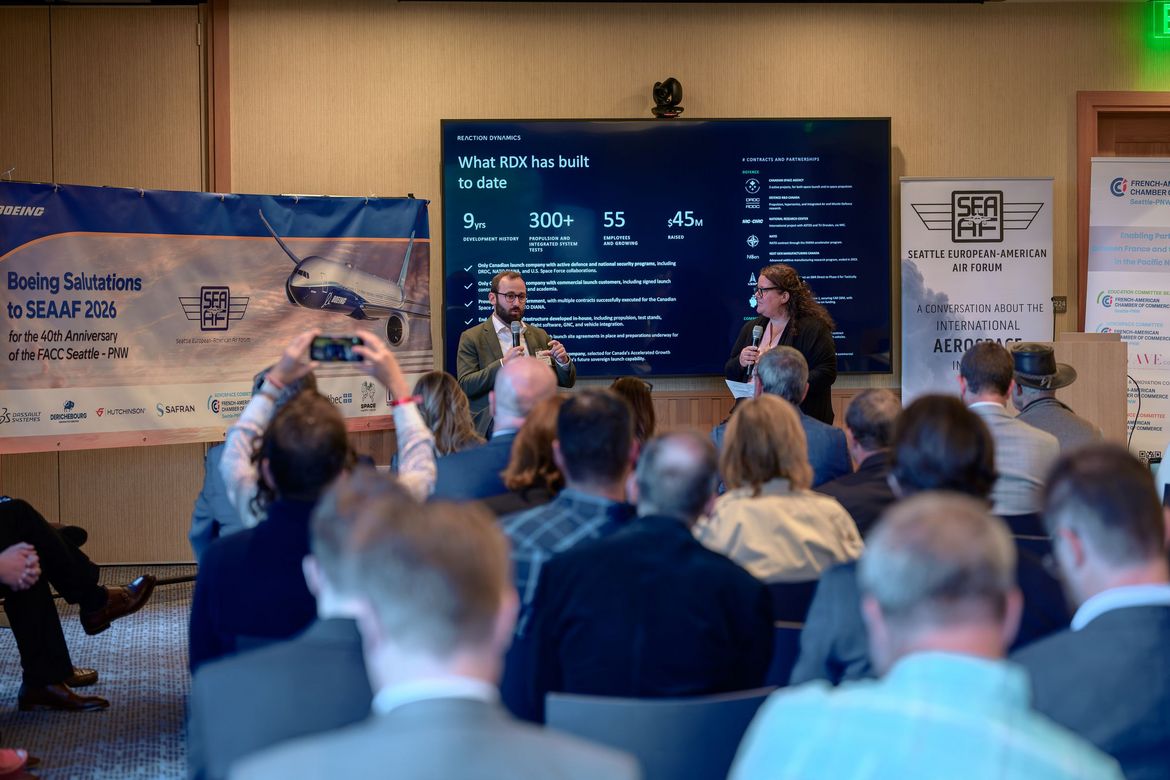
Commercial space development was another central topic throughout the day. The session "Space commercial development: growing capacity - launch, compute, and what's next" reflected the growing importance of the commercial space economy. The discussions lead to three takaways:
Innovation in space infrastructure extends beyond launch vehicles. Participants highlighted a significant bottleneck in solar power generation for space applications and the potential of emerging solutions to unlock new capabilities and configurations.
The current launch-capacity constraints should be viewed through a long-term lens. While demand continues to outpace capacity today, the broader outlook for the space economy remains strong as new infrastructure and capabilities come online.
Regulatory modernization is critical to future growth. Policymakers and industry stakeholders must work together to ensure regulations evolve quickly enough to support the rapidly expanding commercial space economy and emerging technologies.
The conversation reinforced the view that the next decade will bring significant growth, innovation, and investment throughout the space ecosystem.
The skills gap AI can't solve
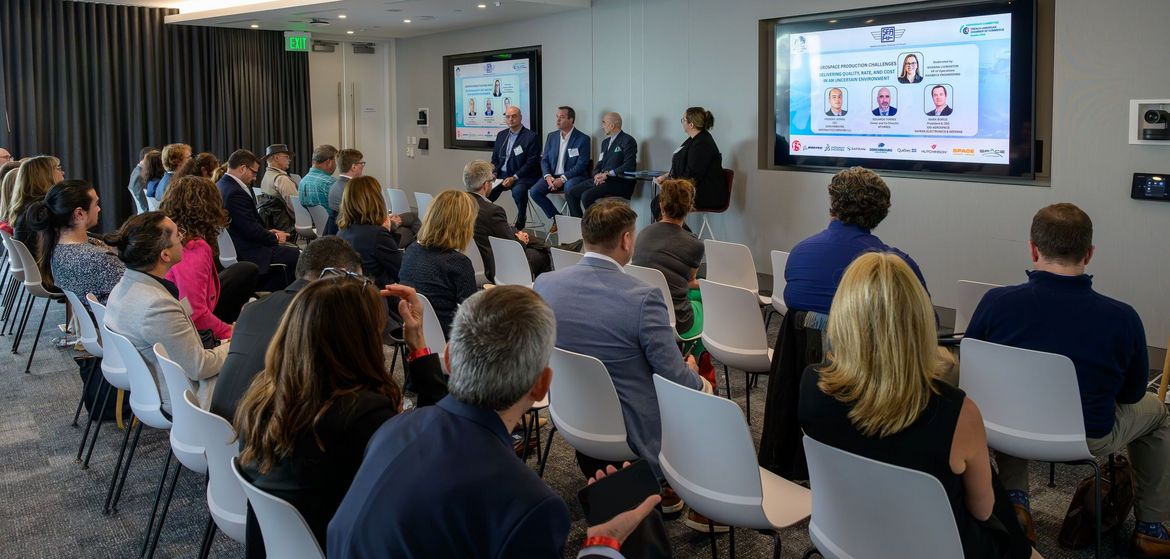
The final mainstage session, "The skills gap AI can't solve: developing leaders for the next generation of manufacturing,"focused on the human side of technological transformation. As artificial intelligence becomes increasingly integrated into aerospace and manufacturing operations, participants discussed which capabilities remain uniquely human. Leadership, communication, creativity, adaptability, trust, and judgment were repeatedly identified as critical differentiators. A key conclusion emerged: organizations that invest in their people will be best positioned to succeed alongside emerging technologies. AI may become a powerful productivity tool, but developing effective leaders and highly skilled teams remains essential to long-term success.
The invitation-only executive roundtable on “AI in Aerospace” continued this conversation by exploring practical applications, governance challenges, cybersecurity considerations, and responsible implementation strategies.AI presents significant opportunities, but governance and data security remain critical. Organizations must understand how AI interacts with proprietary data and ensure appropriate safeguards are in place. AI is a powerful enabler, not a replacement for human relationships and judgment. While it can automate tasks and improve efficiency, many core business functions, particularly in supply chain management and partnership development, still depend on human expertise, communication, and trust. Agentic AI workflows are most effective in structured processes with variable inputs and acceptable levels of uncertainty. Because AI systems are inherently probabilistic, they are best applied to well-defined use cases where flexibility and adaptation are valuable, rather than processes requiring absolute certainty and human accountability.
SEAAF Startup Competition inaugural edition
Congratulations to Sting Solutions!
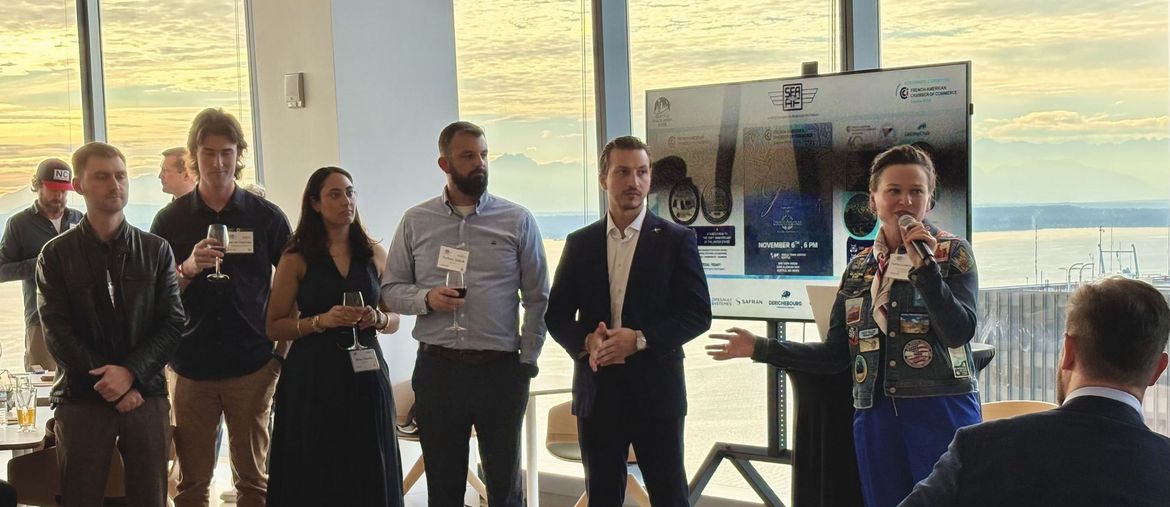
One of the highlights of SEAAF 2026 was the launch of the inaugural SEAAF Startup Competition, which provided a platform for emerging companies developing innovative solutions across aerospace, space, mobility, artificial intelligence, logistics, and advanced technologies.
Listed by “million dollar votes” raised after their 4 min pitches and demos, the finalists were:
- Sting Solutions – $39M votes
- Abri Labs – $13M votes
- WAVE Motion – $8M votes
- Zozio – $7M votes
- Space Market News – $5M votes
- Trackline – $5M votes
- Omniris – $4M votes
The finalists demonstrated the remarkable strength of the innovation ecosystem supporting the future of aerospace and space.
Based on the public vote, Sting Solutions was named the winner of the inaugural SEAAF Startup Competition.
Sting Solutions impressed the audience with its innovative approach to improving operational performance in complex, mission-critical environments through advanced technology solutions that enhance situational awareness, decision-making, efficiency, and operational effectiveness. The company's significant growth, strong market traction, and ability to address real-world challenges across aerospace, defense, and industrial applications distinguished it within an exceptionally competitive group of finalists. Its success reflects the growing impact that innovative scale-ups are having on the future of global aerospace and technology ecosystems.
As a prize, Sting Solutions are offered the FACC Seattle-PNW Startup Membership, as well as a ticket to VivaTech 2027 in Paris!
Looking ahead
As the conference concluded, one message resonated throughout the day: the future of aerospace and space will be built through collaboration. Whether discussing industrial resilience, commercial space development, workforce transformation, artificial intelligence, regulatory frameworks, advanced manufacturing, or startup innovation, participants consistently returned to the value of strong partnerships across industries, countries, and disciplines.
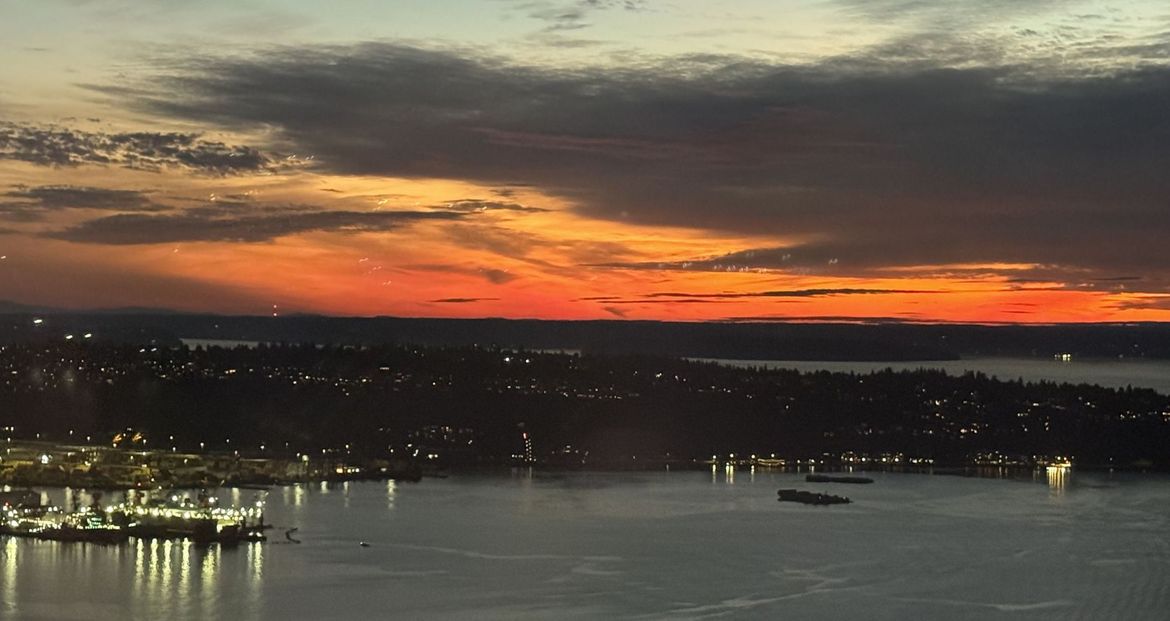
The event ended on a particularly high note. For the first time, FACC PNW partnered with Space Happy Hour for the official networking reception. The collaboration proved to be an extraordinary success, attracting more than 200 participants and establishing a new attendance record in SEAAF history. The reception brought together executives, engineers, entrepreneurs, investors, researchers, students, policymakers, and industry leaders in an environment that fostered meaningful conversations and new connections across the aerospace and space communities.
Thank you for being with us!
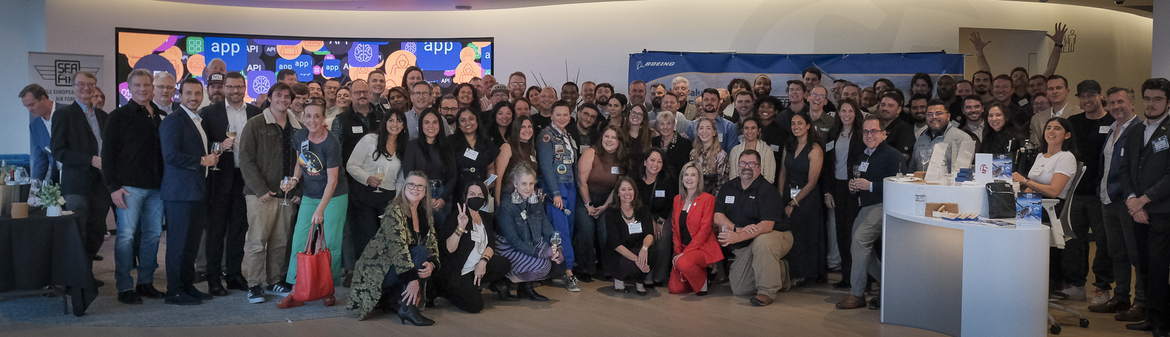
The success of SEAAF 2026 would not have been possible without the support and engagement of an extraordinary community.
Our sincere thanks go to our Sponsors: F5, Boeing, Dassault Systèmes, Québec Government Office in Seattle, Hutchinson Aerospace Defense & Industry, Safran, Derichebourg, and Space Happy Hour.
We extend our gratitude to all of our Speakers, who generously shared their expertise and perspectives from across the aerospace and space industries.
We also thank our valued Partners: Space Northwest, CCI France International, Consulat Général de France à San Francisco, Newell Corporation, and RACC-IT for their continued collaboration and support.
A special thank you goes to our attendees, whose engagement and enthusiasm made the discussions so impactful; to our dedicated team of volunteers, whose hard work ensured a seamless experience throughout the day; and to the SEAAF 2026 Committee, whose months of preparation, vision, and commitment made this exceptional event possible.
Through record attendance, thought-provoking discussions, new partnerships, and the successful launch of the Startup Competition, SEAAF 2026 further established itself as a leading transatlantic forum for aerospace and space innovation. More importantly, it demonstrated that the future of our industry will be built together through collaboration, innovation, and a shared commitment to advancing the next chapter of aviation and space exploration.